
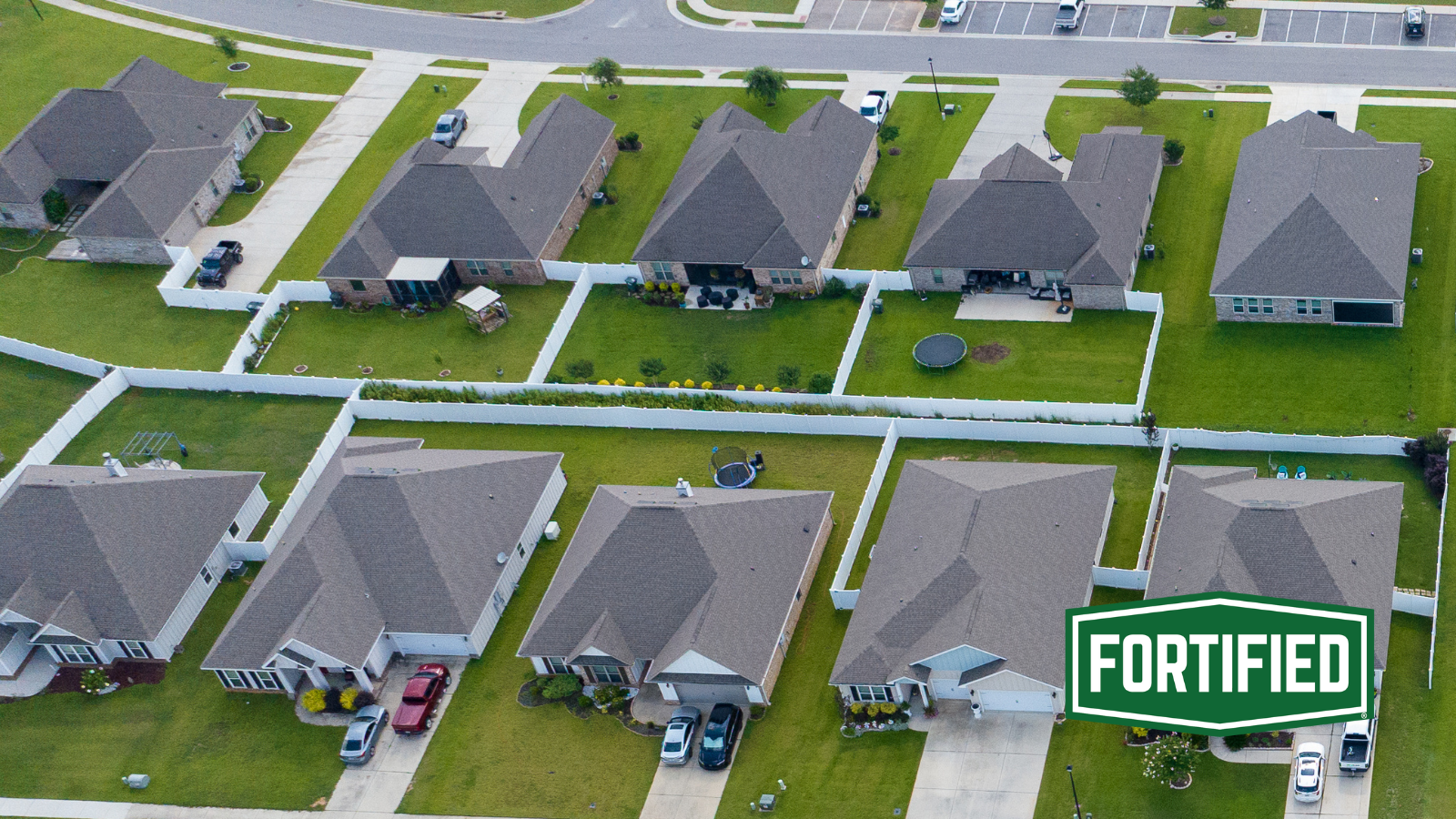
Insurance helps U.S. homeowners recover financially after damage caused by severe storms, wind, hail and other covered events. Growing populations and construction costs are adding to increasing annual damage costs, putting pressure on insurers and policyholders. As underlying costs increase, so is the cost of insurance coverage.
Today, homeowners may notice changes in premiums, deductibles and coverage options.
Yet, even in times of change, homeowners have opportunities to manage their risk more effectively. If you live in a storm or wind-prone area, investing in resilience can reduce severe weather damage, manage out-of-pocket costs, and improve access to affordable insurance
Home Insurance: What’s Changed and Why
Over the past decade, the cost of home insurance has risen across the U.S. From 2021 to 2024, approximately 95% of U.S. zip codes paid higher premiums, averaging $600-$650 more per year, according to ZestyAI.
There are a few primary drivers of these changes:
- Growing populations are leading to more structures being impacted by storms and an increased potential for loss.
- Rising construction costs are making every post-storm repair and rebuild more expensive.
- Fraud occurs in many forms, but the Coalition Against Insurance Fraud estimates fraud occurs in about 10% of property-casualty insurance losses.
Building materials, labor shortages, and global trade pressures have all increased replacement costs. In 2024, $14 billion in goods used to build multi- and single-family homes were imported from outside the U.S. According to the National Association of Home Builders (NAHB), tariffs on these building materials and supply-chain constraints have contributed to higher prices and increased the cost of repairs.
Some coverage options may result in lower premiums while requiring homeowners to accept a great share of the risk. To keep coverage more affordable, homeowners can be more proactive in managing their risks to avoid costly losses from occurring.
Insurance Coverage Changes: What This Means for Homeowners
Two of the biggest changes affecting out-of-pocket costs are Actual Cash Value (ACV) roof coverage and Percentage-Based Wind and Hail Deductibles. Both increase what you pay out-of-pocket when damage happens – and if your roof is older, you’re more likely to pay more. More carriers are using ACV roof coverage, which factors in depreciation (age and wear and tear). Under ACV coverage, your claim payouts for roof damage can be reduced by 30-60% compared with replacement cost policies. Research by ZestyAI, which analyzed rate filings across Colorado, Ohio, North Carolina, Oklahoma and Texas, found that 78% of carriers now offer homeowners policies with ACV roof coverage.
Deductibles are also changing. Instead of a flat dollar amount, Percentage-Based Wind and Hail deductibles are calculated as a percentage of your home’s insured value. While 2 and 3% deductibles are common, some carriers offer lower premiums to homeowners willing to assume a higher percentage. With median values of US homes now topping $400,000, a 3% wind/hail deductible can be well over $10,000. According to the Zesty AI study, 93% of the carriers studied offer homeowner policies with percentage-based deductibles.
Getting Ahead: Resilience as a Practical Solution to Risk
To help homeowners proactively manage risk, resilience upgrades can significantly reduce storm damage and long-term costs.
Research consistently shows that homes built or upgraded to higher resiliency standards experience less damage during storms. Programs like FORTIFIED, developed by the Insurance Institute for Business & Home Safety (IBHS), turn this science into building standards that homeowners can use. A FORTIFIED roof can limit damage and prevent major repairs, saving a homeowner thousands of dollars.
When Hurricane Sally made landfall in coastal Alabama (September 2020), more than 17,000 FORTIFIED were put to the test. A recent study by the Center for Risk and Insurance Information at the University of Alabama found that FORTIFIED homes were 70% less likely to need an insurance claim than homes built to the local code. If all homes had been constructed to the FORTIFIED Home™ – Gold standard, damage could have been reduced by up to 75%.
Making Resilience More Accessible: Grants and Financial Support
A common barrier to resilience upgrades can be upfront costs. However, homeowners have options available to ease the financial burden. Several states and the Federal Home Loan Bank offer grants to fund mitigation upgrades, such as roof strengthening and structural resilience measures. Programs offering grants to offset the costs of FORTIFIED upgrades include:
- The Federal Home Loan Bank of Dallas (FHLB): grants up to $17,000
- Strengthen Alabama Homes Program: grants up to $10,000
- North Carolina – Strengthen Your Roof: grants up to $10,000 for coastal homes through the North Carolina Insurance Underwriting Association (NCIUA)
- South Carolina Safe Home Mitigation Grant Program: grants between $3,000-$7,500
- Strengthen Oklahoma Homes Grant Program: grants up to $10,000
- Louisiana Fortify Homes Program: grants up to $10,000
Additional grant programs are planned or launching soon in Kentucky, Maine, Arkansas and Minnesota, expanding access across more regions.
Strengthening Homes, Reducing Risks
Homeowners have options. Understanding how your coverage has changed enables you to make more informed decisions before a loss occurs. We recommend three practical next steps:
- Review your policy details, especially your roof coverage, and confirm how your deductibles are calculated.
- Explore upgrades to your home, including FORTIFIED Roof™ or FORTIFIED Silver™.
- Investigate grants and assistance programs in your area for resilience upgrades.
Stay In The Know
Do you want to keep up with the latest resiliency research? Would you like timely tips and reminders to keep your home safe from Mother Nature? Are you interested in the science behind the FORTIFIED standard? Then sign up for the FORTIFIED Update, today!